
So, You’ve Decided You Want to Talk to Someone. Now What?
There often comes a moment when you just know. You’ve been trying to manage on your own, pushing through the anxiety or the flat, grey feeling, but you realise something needs to change. You think, “Okay, I need to talk to someone.”
And for a second, there’s a sense of relief in that decision. But then comes the next thought: “...but who? And how?”
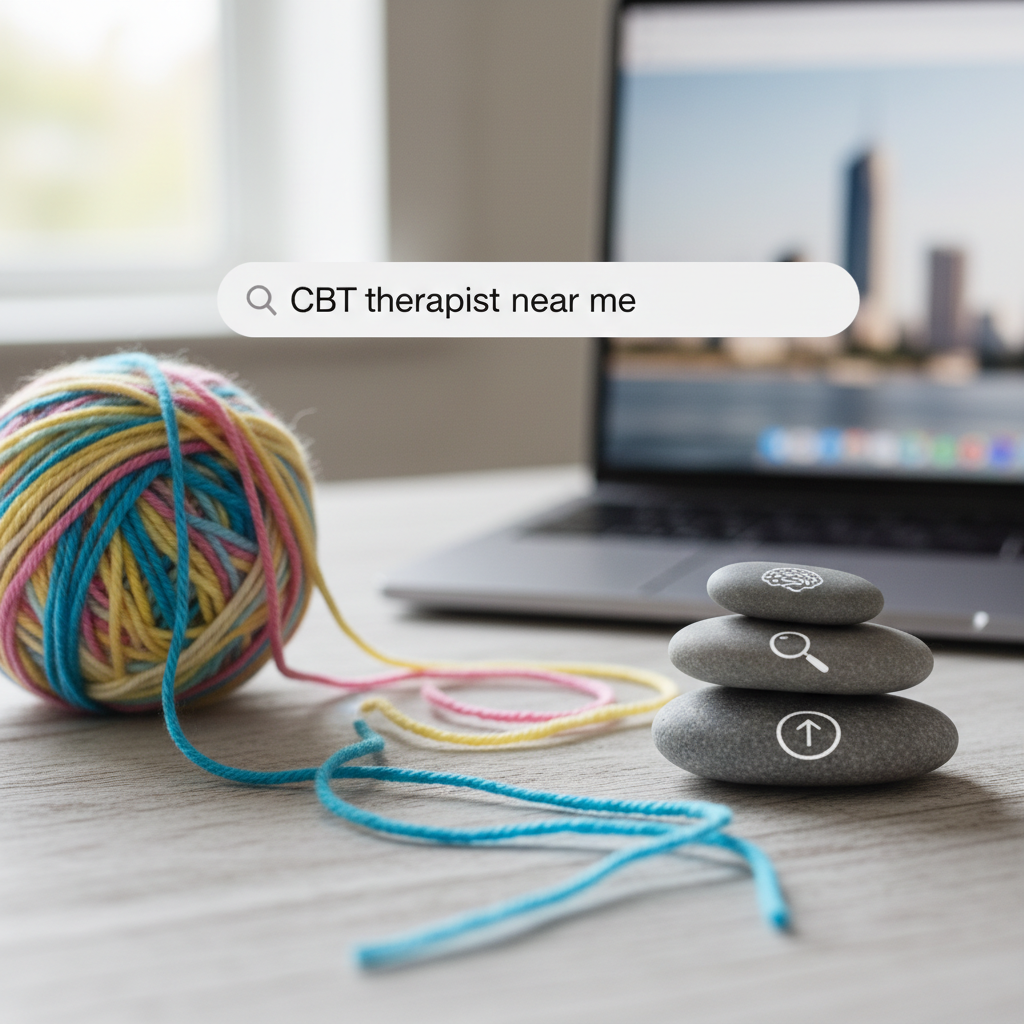
Suddenly, you’re staring at a search engine, typing in “CBT therapist near me” and a huge, overwhelming list of names, websites, and acronyms appears. Instead of feeling clearer, you feel more stuck than before. The task of finding help starts to feel like another exhausting job on an already-too-long list.
What Really Matters When Choosing a Therapist?
I’ve spoken to so many people who get stuck at this exact point. They spend weeks, sometimes months, with the tab open on their browser, unable to make a choice for fear of making the wrong one. What if I pick someone I don’t like? What do all these letters after their name mean? What if it’s a waste of money?
Let’s try and cut through some of that noise. When you’re choosing a therapist, there are really only a couple of things that are truly important at the start.
1. Are they properly qualified and registered?
This sounds formal, but it’s really about safety. In the UK, anyone can call themselves a counsellor, which is why it’s so important to look for registration with a professional body. You’ll see acronyms like BACP, UKCP, and BABCP. Think of these as a quality mark.
It means the therapist has met rigorous standards for training and ethics, and they are accountable for their work. It’s the baseline that tells you you’re in safe hands. Most therapists will state their registration clearly on their website.
2. Do you think you could actually talk to them?
This is the one you can’t tell from a list of qualifications. It’s about the human connection. In my experience, the ‘fit’ between you and your therapist is one of the biggest factors in whether therapy is helpful.
Read what they’ve written on their website. Do their words resonate with you? Do they sound like a real person? Sometimes you’ll just get a gut feeling from the way someone describes their approach. Trust that feeling. You're not looking for a new best friend, but you are looking for someone you feel you could be honest with.
Thinking Beyond “Near Me” with Online CBT Therapy
For a long time, the search for a therapist was limited by geography. But the growth of online CBT therapy across the UK has changed everything. It means you’re no longer limited to whoever happens to have an office in your town.
You can find the right person for *you*, regardless of where you both live. This is especially helpful if you live somewhere with fewer local options or if you’re looking for support with something specific.
Many clients tell me the thought of travelling to an appointment felt like another source of stress, especially when they were already constantly feeling on edge and restless. Online sessions mean you can have your therapy from a space where you already feel safe and comfortable – your own home. No travel, no waiting rooms, just a dedicated hour for you.
What to Expect from CBT Counselling
CBT, or Cognitive Behavioural Therapy, can sound a bit clinical. But in practice, it’s a very grounded and collaborative way of working. We’re not here to dig endlessly into your past, but to understand what is happening for you right now.
Together, we look at the patterns that keep you stuck. For instance, we might explore how certain thoughts trigger feelings of anxiety, and how those feelings then lead you to avoid certain situations. It’s about seeing those connections clearly. This is a core part of how CBT helps you break the worry cycle.
It’s a very practical approach. We’ll look at the difference between worrying and problem solving and find strategies to help you manage difficult thoughts and feelings. Many people also find it helps them understand why stress starts affecting your body with things like tension headaches, poor sleep or an upset stomach.
Making the First Step a Little Easier
Reaching out is often the hardest part. We get that. That’s why we keep it simple. There’s no complex referral process here. You can send us an email or fill in a short form on our website. We’ll then get back to you to arrange an initial online session.
It’s also important for you to know that we work on a session-by-session basis. There’s no pressure to sign up for a huge block of sessions. You can have one and see how it feels. Our fee is £68 for a full hour session, and you remain in control of how many you have, and when.
That first session is simply a conversation. It’s a chance for you to explain what’s been going on and for us to see how we might be able to help. Finding the right support can make such a difference, and the process of finding it doesn't have to be another source of stress.
Written by Sian Jones, Founder of Online CBT Counselling. Sian has extensive experience helping individuals manage anxiety, stress, low mood and other emotional challenges.