
It’s the middle of the night, and your mind is buzzing. You’re turning a problem over and over, examining it from every angle. It feels productive, like you’re finally getting to grips with it. But the hours tick by, sleep stays just out of reach, and by morning, you’re no closer to a solution. You’re just exhausted.
This cycle is something we see so often. The belief that late-night mental churning is a form of problem-solving is a common trap. In reality, it’s usually just worry in disguise, and it’s a significant contributor to sleeplessness. Understanding this difference is a vital first step, and it’s a central part of effective insomnia therapy.
What’s the Real Difference?
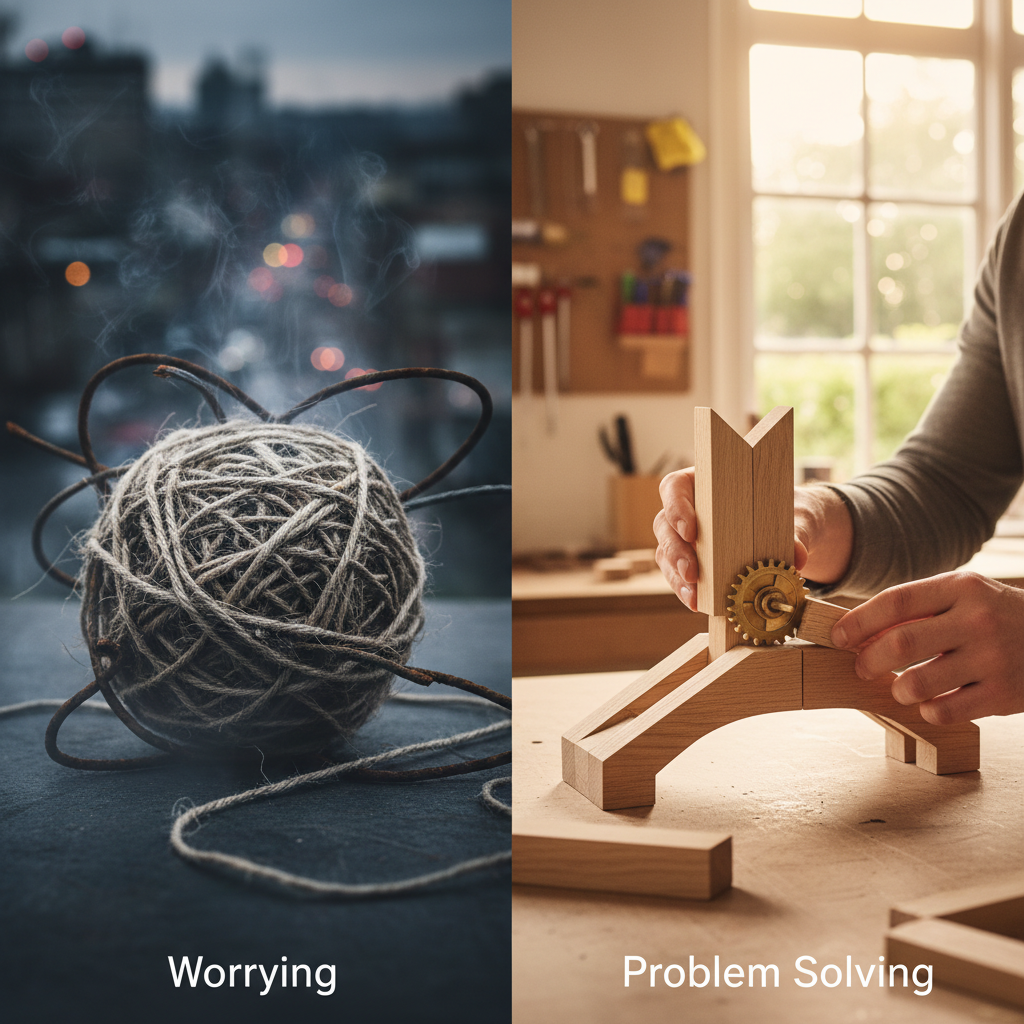
Worry and problem-solving can feel similar, but they have completely different outcomes. Worry is circular. It’s often vague, repetitive and focused on imagined negative futures. Your mind jumps to the worst-case scenario, asking questions that have no concrete answers, like “What if I fail?” or “What will they think of me?”.
You might find yourself replaying conversations or situations, searching for a different outcome that isn't possible. It’s emotionally draining and keeps your nervous system on high alert, making sleep feel impossible. It can even lead to very real physical signs of anxiety.
Problem-solving, on the other hand, is linear and proactive. It’s about identifying a specific, definable issue and brainstorming concrete, actionable steps. It asks questions like: “What is the first small thing I can do tomorrow?” or “Who could I ask for support with this?”. It’s forward-moving and aims to reduce a problem, not just dwell on it.
How Worry Fuels Sleepless Nights and When Insomnia Therapy Can Help
At night, when the world is quiet, our internal noise gets louder. Without the usual distractions of the day, the anxious part of our brain takes centre stage. If your default mode is worry, your brain interprets this as a signal that you are in danger.
It releases stress hormones like cortisol and adrenaline, which are designed to keep you awake and vigilant. So while you’re desperately trying to sleep, your body is getting signals to stay alert. You lie there asking, ‘Why can’t I switch my brain off at night?’, not realising your mind is working hard to keep you awake.
This is where targeted insomnia therapy, particularly using Cognitive Behavioural Therapy for Insomnia (CBT-I), can be so effective. It’s not about just 'trying harder' to sleep. It’s a structured approach to retrain your brain and break the powerful link between your bed and a state of anxious wakefulness.
A Practical Step You Can Try Tonight
Learning how to stop overthinking is a skill. One technique we often suggest is creating a 'Worry Period' during the day. Set aside 15-20 minutes in the early evening to sit down and actively write down everything that concerns you.
Then, when a worry pops into your head at 2 am, you can gently tell yourself, “Thank you for the reminder, but I have a scheduled time to deal with that tomorrow.” This helps to contain the worry, teaching your brain that nighttime is for rest, not for analysis.
Another approach is to ask yourself one simple question: “Is there a single, practical step I can take on this tomorrow morning?” If the answer is yes, write it on a notepad by your bed. If the answer is no, label the thought as ‘unproductive worry’ and guide your attention back to the feeling of your breathing.
How Online Counselling Works
While these techniques can offer some relief, changing deep-seated mental habits can be challenging on your own. Working with a therapist provides structure and support to identify the specific thought patterns that are keeping you stuck.
In our online sessions, we use proven CBT approaches to help you understand your own cycle of worry and sleeplessness. We’ll help you develop a toolkit of strategies that are tailored to you, so you can learn to approach your thoughts with more calm and objectivity.
Because the sessions are online, you can fit them into your life without the stress of travel, from the comfort and privacy of your own home. Our fee is £68 for a full hour session and we work session by session, giving you complete control with no long-term commitment.
If you're tired of sleepless nights and ready to learn how to quiet your mind, we're here to help. You can read more about our approach and book your first appointment via our website. Taking that first step towards understanding is often the beginning of finding peace.