
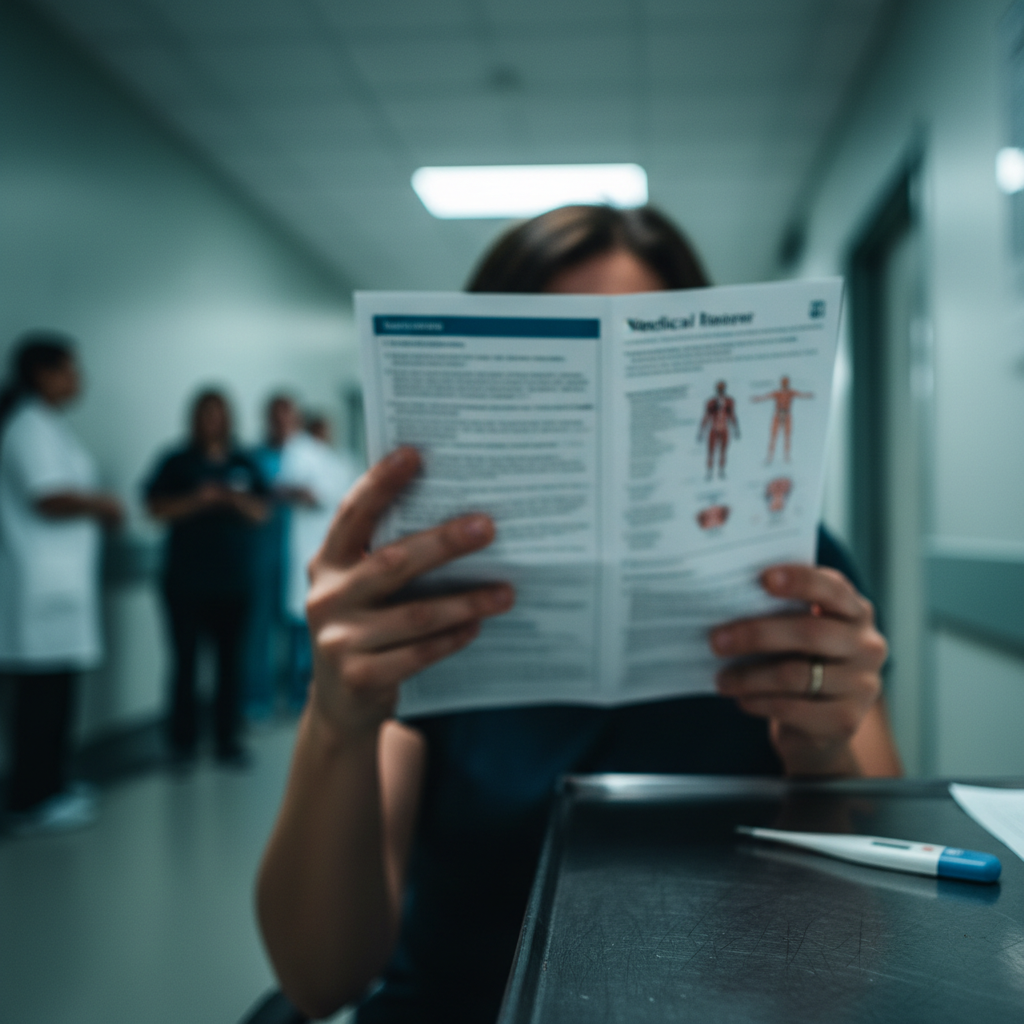
It starts with something small. A dull ache that wasn’t there yesterday. A slight dizziness when you stand up too fast. For a moment, it’s just a physical sensation. But then, the thought arrives: “What if it’s serious?” Before you know it, you’re trapped in a spiral of worry, scanning your body for more evidence and your mind for worst-case scenarios. It’s a deeply isolating experience, and one where the support of a good private therapist can be invaluable in helping you find your footing again.
What makes health anxiety so powerful, and so utterly convincing, is that it hijacks your body’s natural warning systems. It feels real because, on some level, it is. The fear you feel is genuine, and that fear creates its own physical symptoms – a racing heart, a tight chest, a tense body. Your brain then points to these symptoms as ‘proof’ that the original danger was real all along. It’s a vicious, self-fulfilling cycle.
The Anatomy of Health Anxiety's Grip
I've spoken with so many people who tell me, “But the symptoms feel so real!” They’re right. When you’re anxious, your body enters a state of high alert. This can cause all sorts of physical changes. Your muscles might ache because they are constantly braced for danger, which you might find more about in our post on why your body feels so tense all the time. That tension can lead to headaches. The adrenaline can cause palpitations. Your gut can churn.
Health anxiety takes these very real, anxiety-driven sensations and misinterprets them as signs of a catastrophic illness. You become a detective, and your own body is the crime scene. Every tiny change is a clue, and every search on the internet provides a list of terrifying suspects.
This search for answers feels productive, but it’s actually the fuel for the fire. It’s a form of reassurance-seeking. The problem is, the internet can’t give you the certainty you crave. For every ten articles that suggest your symptom is harmless, you’ll find the one that mentions a rare, life-threatening condition. And that’s the one your anxiety will cling to.
What a Private Therapist Explores with Health Anxiety
A common misconception is that seeing a therapist for health anxiety is about being told “it’s all in your head.” That’s not what we do. The goal isn’t to prove you aren’t ill – that’s a job for your GP. Our work together is about learning to manage the anxiety itself, so it no longer controls your life.
Using approaches like Cognitive Behavioural Therapy (CBT), we can start to gently unpick the cycle. We look at the connection between a physical sensation, the thought you have about it, and the resulting feeling of panic. From there, we can question the automatic, catastrophic thoughts. Is there another, less frightening explanation for this headache?
We also work on behaviour. We might look at reducing the compulsive checking, whether that’s body scanning, Googling, or seeking reassurance from family. This can feel scary at first, which is why we do it gradually. The aim is to build your tolerance for uncertainty. Life is uncertain, and learning to live with that reality without being overwhelmed by fear is a huge step forward. Sometimes this anxiety is a way our minds deal with other unresolved issues, which is something we can explore if it feels relevant to you.
Small Steps You Can Take
- Schedule ‘Worry Time’: Instead of letting a worry derail your day, try to “postpone” it. Tell yourself, “I will allow myself to think about this for 15 minutes at 6 pm.” Often, by the time 6 pm arrives, the urgency has faded. This is a core part of managing what can feel like a life taken over by worry.
- Shrink the Reassurance Seeking: If you find yourself asking your partner “Do you think this is normal?” multiple times a day, try to cut it back to just once. It’s a small step in learning to trust your own judgement again.
- Engage Your Senses: When you feel a wave of panic about a symptom, try a grounding technique. Name five things you can see, four things you can feel (the chair beneath you, your feet on the floor), three things you can hear, two you can smell, and one you can taste. This pulls your focus out of your head and into the present moment.
Frequently Asked Questions
Can a private therapist diagnose my physical symptoms?
No. A therapist is not a medical doctor. It is essential to have any new or persistent physical symptoms checked by your GP. Our role is to work with the anxiety, fear, and behaviours that are attached to your health concerns.
Will I have to talk about my past?
Only if it feels useful to you. Sometimes, past experiences can shape our present-day anxieties, and exploring them can be helpful. But the focus is always on what is affecting you now and how you can move forward. Some people find that understanding past difficult experiences is key to their progress.
How many sessions will I need?
There’s no set number. We work on a session-by-session basis, so you are always in control. Some people find that a handful of sessions is enough to get the tools they need, while others prefer longer-term support. There’s no long-term commitment.
Health anxiety can feel like a prison, making your world smaller and smaller. But it doesn’t have to be this way. Understanding the mechanics of the anxiety is the first step. The next is getting the right support to help you step out of the cycle and back into your life.
If you recognise yourself in this and would like to see how counselling could help, please get in touch. We offer online sessions via video, which you can attend from the comfort of your own home. Our fee is £68 for a full hour session, booked one at a time. You can book an initial session through our secure online system.
Written by Sian Jones, Founder of Online CBT Counselling. Sian has extensive experience helping individuals manage anxiety, stress, low mood and other emotional challenges.