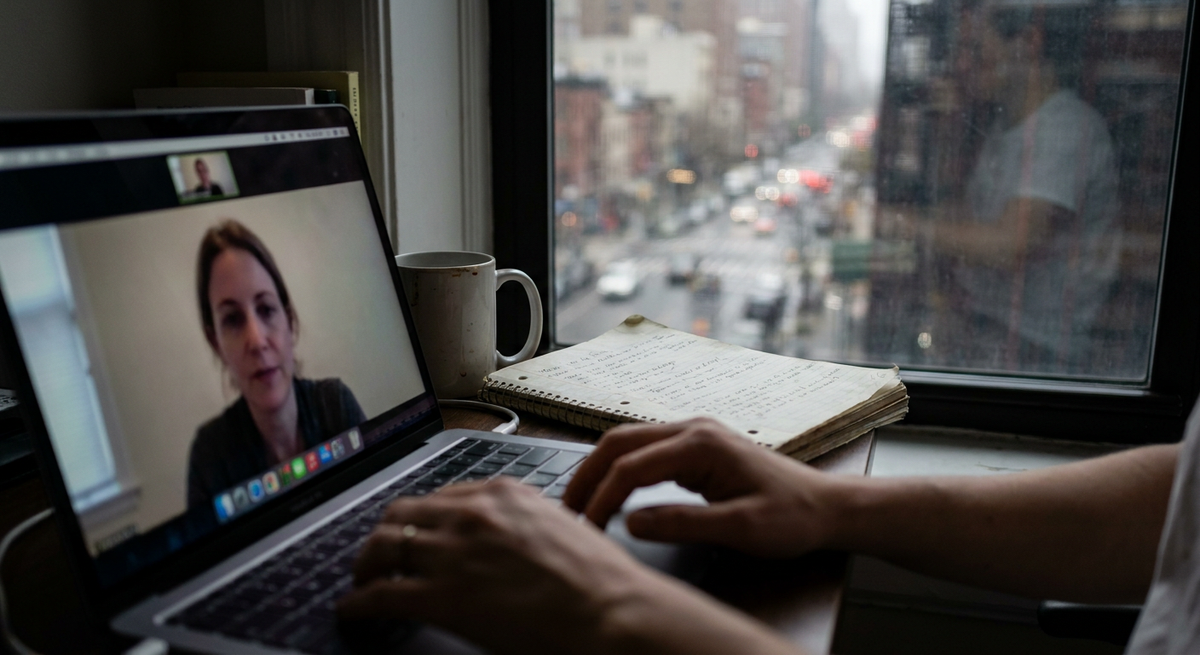
For someone experiencing frequent panic attacks or agoraphobia, the thought of travelling to a therapy appointment can be an overwhelming obstacle. The anticipatory dread of leaving the house, using public transport, or sitting in a waiting room might trigger the exact symptoms you need help managing. Online therapy removes this initial barrier, allowing you to begin treatment from an environment where you currently feel secure.
Understanding the panic cycle
Panic disorder often operates in a loop. A sudden physical sensation, perhaps breathlessness or a racing heart, is interpreted as a sign of immediate danger or medical catastrophe. This interpretation triggers the body's threat response, which intensifies the physical symptoms, leading to a full panic attack.
Agoraphobia frequently develops as a protective measure against this cycle. People begin avoiding places or situations where a panic attack might occur, or where leaving would be difficult or embarrassing. Over time, the restricted area where a person feels secure can shrink considerably.
Cognitive Behavioural Therapy (CBT) interrupts this cycle. Rather than just talking about anxiety, CBT for panic attacks involves active, structured strategies to change how you respond to physical sensations and feared situations.
The role of interoceptive exposure at home
A core component of remote panic treatment UK therapists use is interoceptive exposure. This technique involves deliberately and safely bringing on the physical sensations of panic in a controlled way. By doing things like breathing quickly through a straw or spinning in a chair, you can temporarily recreate dizziness or breathlessness.
The goal is to learn that these physical sensations, while uncomfortable, are not dangerous. Practising this during a video call allows your therapist to guide you through the process step by step, monitoring your response and helping you evaluate your thoughts as the sensations occur.
Being at home means you can engage with these exercises without the added pressure of being in an unfamiliar clinic or worrying about how you will get home afterwards. The home environment provides a controlled baseline from which to challenge your fear of these physical symptoms.
Planning graded exposure therapy
Alongside addressing physical symptoms, treatment usually involves graded exposure therapy. This means gradually and systematically facing the situations you have been avoiding, rather than rushing into overwhelming scenarios.
Your therapist will help you break down your wider goals into very small, manageable steps. If leaving the house feels impossible, the first step might simply be standing by an open front door for two minutes. Over time, these steps increase in difficulty, perhaps moving on to walking to the end of the street or visiting a local shop.
Online therapy for agoraphobia works particularly well for this planning stage. You can discuss your immediate environment, map out precise routes or tasks, and review your progress during each online session. Because you are already at home, you can put your agreed steps into practice immediately after logging off, without a jarring transition from a clinic setting.
Practical advantages of remote sessions
Attending therapy online offers several practical benefits for those dealing with intense anxiety and avoidance behaviours:
- Removing travel anxiety: You do not have to plan a route, worry about traffic, or face the stress of public transport before your session begins.
- Consistent support: When leaving home is difficult, missing appointments becomes a risk in traditional therapy. Online sessions help maintain the regular attendance necessary for CBT to be effective.
- Immediate application: The skills you learn during your video call can be tested straight away in your daily life, creating a seamless link between therapy and your normal routine.
What to expect from remote treatment
While CBT is highly structured, your therapist will always tailor the pace to your specific needs. Exposure exercises are never forced. They are planned collaboratively and undertaken only when you understand the rationale behind them and agree to try the experiment.
Treatment requires commitment and a willingness to tolerate short-term discomfort for long-term progress. Your therapist is there to teach you the psychological tools, help you test your beliefs about panic, and review what happens when you put these techniques into practice.
Choosing your therapist and booking
Getting started with onlinecbtcounselling.com is straightforward. You can browse our therapist profiles, watch short introductory videos, and check live availability. This allows you to choose a professional whose approach aligns with your needs and book an appointment time that suits your schedule.
Each 60-minute online video session costs £68. We operate strictly on a session-by-session basis, meaning there is no requirement to commit to a long-term block of appointments. You can book directly through the website whenever you are ready to begin.
Sian Jones, Founder of Online CBT Counselling and professional counsellor.