How Do I Find an Online Therapist I Can Actually Trust?
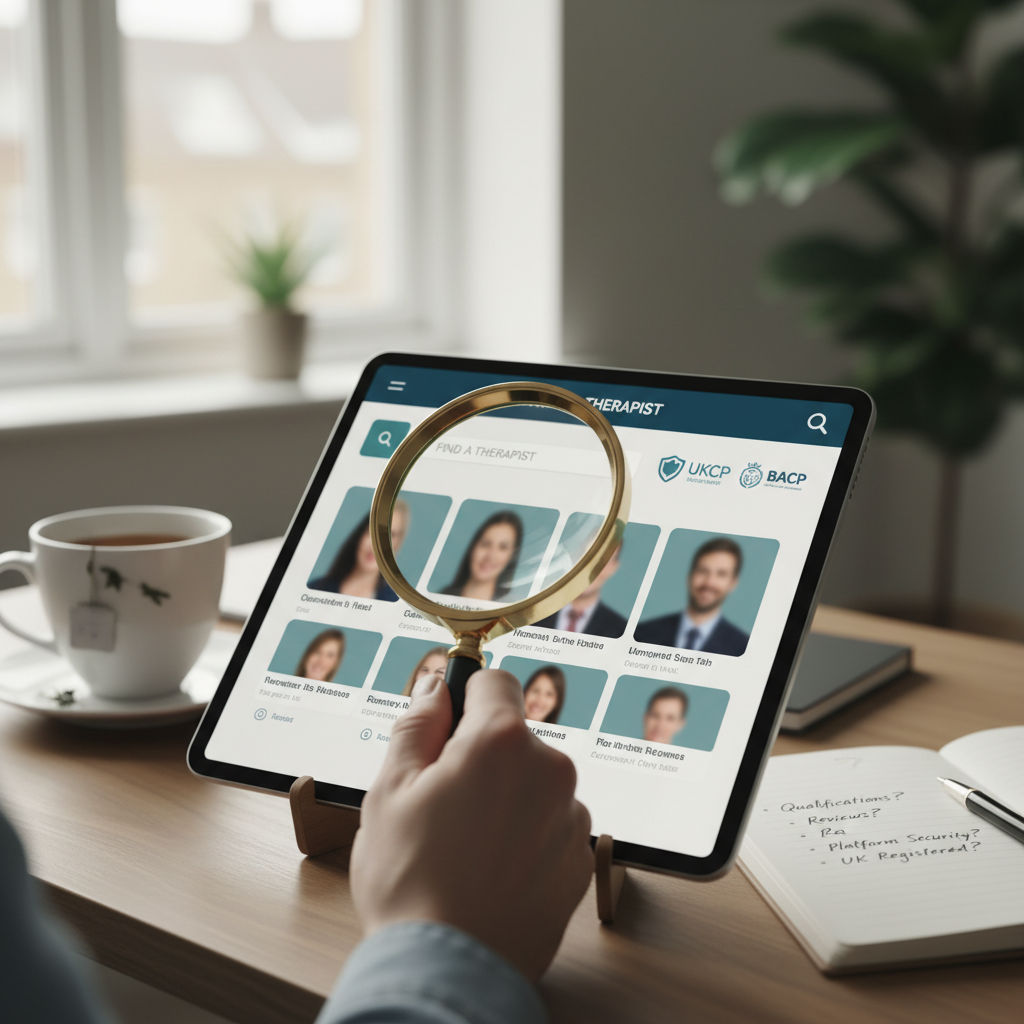
You’ve made the decision. You’re going to look for an online therapist. But then you open your laptop, type a few words into a search engine, and a wall of faces and names appears. Suddenly, the decision feels less like a positive step and more like an impossible task.
Each profile promises to help, but they all start to blur into one. How do you choose? What if you pick the wrong person? The pressure to find the ‘perfect’ therapist can be so intense that it becomes easier to just close the browser and put it off for another day. If that sounds familiar, I get it. This search can feel like a job interview where you’re on both sides of the desk.
So, let's break it down. Finding the right online therapist in the UK isn't about finding a flawless expert; it's about finding a qualified professional who feels right for *you*.
First things first: Are they qualified?
This is probably the biggest worry I hear from people. In a digital world, how can you be sure the person on the other side of the screen is a genuine, trained professional? It’s a completely fair and important question.
In the UK, terms like 'therapist' or 'counsellor' aren't legally protected, which can be confusing. However, most credible therapists will be registered with a professional body. The two main ones to look for are the BACP (British Association for Counselling and Psychotherapy) and the UKCP (UK Council for Psychotherapy). You might also see accreditations with bodies like the BABCP for cognitive behavioural therapists.
Being a member of one of these organisations means the therapist has completed a substantial, recognised qualification and agrees to abide by a strict code of ethics. It’s your assurance of professionalism and safety. Most therapists will state their membership clearly on their website – if they don’t, you are well within your rights to ask.
Beyond qualifications: Finding the right ‘fit’
A therapist can have all the qualifications in the world, but if you don't feel comfortable talking to them, the therapy is unlikely to be effective. This 'fit' is a personal thing, but there are a few things you can look for.
Start by reading what they’ve written on their website. How do they describe their approach? Does it sound rigid and clinical, or does it sound human and approachable? Do they talk about the issues you're facing in a way that makes you feel seen? For example, if you're struggling with constant worry, you might want to understand how CBT actually helps with everyday stress before committing.
Personally, I believe the words a therapist uses on their own site tell you a lot. It’s a glimpse into how they think and how they might speak to you in a session. Trust your instinct here. If someone’s profile makes you feel understood, that’s a very good sign.
The practical questions you might feel awkward asking
It's easy to get so caught up in the emotional side of things that we forget the practicalities. These are just as important for making online counselling work for you. Don't be afraid to ask these questions before you even book.
- What technology do you use? Most online therapy happens over secure video platforms like Zoom. It's good to know what to expect.
- What’s the plan if the internet connection drops? This happens! A professional therapist will have a simple backup plan, like agreeing to call you on the phone to finish the session, so it doesn't become a source of stress.
- How does scheduling work? One of the big advantages of UK online therapy is its flexibility. You can fit it around work or family commitments without worrying about travel time.
- What are the fees and commitment? It’s important to be clear on cost from the outset. Here, for example, our fee is £68 for a full hour session. We also work on a session-by-session basis, so you are never tied into a long-term commitment. You can have as many or as few sessions as you need.
Knowing the answers to these questions can ease a lot of the background anxiety. If you’re curious about the structure of a session, it can be helpful to know what happens during your first online CBT session, as it often sets the tone for the work ahead.
When the search itself feels overwhelming
Sometimes, the very act of searching for help can feel like another thing to add to your 'to-do' list, especially when you’re already feeling exhausted or low. It can trigger that familiar feeling of avoidance, where putting something off feels easier than facing it.
If you recognise this pattern – perhaps because you notice you keep avoiding things that make you anxious in other areas of your life too – be gentle with yourself. You don’t have to find the ‘perfect’ person in one afternoon. Maybe the first step is just to shortlist two or three people whose websites resonate with you.
The goal isn't to make a life-altering decision based on a profile picture and a paragraph of text. The goal is to find someone you feel comfortable enough with to have one conversation. That’s it. That’s the next step.
You just need someone to start the conversation with
Choosing a therapist isn't a pass/fail test. It's the start of a supportive, professional relationship. It’s about finding a person who can provide a steady, confidential space for you to untangle your thoughts and feelings without judgement.
If you’ve been thinking about online counselling but the search has held you back, we hope this has made the process feel a little more manageable. If our approach feels right for you, we invite you to get in touch. There’s no pressure to book. You can send us an email, and we’ll get back to you to arrange a session at a time that works for you.
Written by Sian Jones, Founder of Online CBT Counselling. Sian has extensive experience helping individuals manage anxiety, stress, low mood and other emotional challenges.